
A vehicle off the road because of a breakdown that could have been avoided costs you twice: the repair, and the work that doesn't get done while it sits in the garage. Preventive maintenance means getting ahead of those breakdowns by checking and replacing parts before they fail. This article helps you build a simple plan for your fleet: what to check, how often, and how to keep track so that it doesn't depend on anyone's memory.
Preventive, corrective and why it pays off
Corrective maintenance is what you do once something has already broken. Preventive maintenance follows a schedule based on mileage or time, even if the vehicle is running well. Between the two sits what many garages call predictive maintenance: watching for warning signs (noises, fuel consumption, wear) so you can step in just before a failure.
Preventive maintenance pays off for three reasons:
- You choose when the vehicle is off the road. You can take it to the garage on a quiet day, not when it breaks down in the middle of a job.
- Repairs tend to be cheaper. Replacing brake pads in good time costs less than replacing pads and discs.
- It affects safety. Brakes, tyres, steering and lights can't be left to chance.
What to check and how often
The main reference is always the manufacturer's maintenance plan for each vehicle, which sets out the intervals by mileage and by time. Whichever comes first applies. From there, the table below summarises a common way of organising it; adjust it to your models and how you use them:
| Frequency | What to check |
|---|---|
| Daily or before setting off | Lights, fuel level, dashboard warning lights, visible condition of the tyres, any new dents or knocks. |
| Weekly | Tyre pressure, oil level, coolant, windscreen washer fluid and wiper blades. |
| According to the manufacturer's plan | Oil and filter changes (oil, air, fuel, cabin), brake fluid, timing belt, spark plugs or glow plugs. |
| Periodically or according to wear | Brake pads and discs, shock absorbers, wheel alignment, battery, clutch. |
| Before each ITV (Spanish roadworthiness test) | General check: lights, brakes, tyres, emissions, play in the steering and suspension. |
Vehicles that work in tough conditions, such as urban deliveries with lots of stops, dirt tracks, heavy loads or trailers, usually need shorter intervals. Many manufacturers distinguish between a normal plan and one for severe use; check which one applies to you.
How to set up your fleet plan
A plan that only exists in the supervisor's head disappears as soon as they change roles. To make it work, put it in writing and back it with data:
- Create a record for each vehicle with its registration number, model, date of first registration and current mileage.
- Note the manufacturer's intervals for each task: how many kilometres and how much time between each one.
- Log every job with the date, the mileage and what was done. Keep the related invoice.
- Work out the next service for each vehicle from the last one and the kilometres it covers each month.
- Review the plan every month and book into the garage the vehicles that are approaching their service.
For example, if a van covers around 3,000 km a month and its oil change is due every 30,000 km, you know you have about ten months from the last change, unless the time-based limit comes sooner. To do that calculation you need each vehicle's real, up-to-date mileage.
Warning signs that something is wrong
Preventive maintenance is no substitute for staying alert. Some signs should be reported by drivers as soon as they notice them:
- A warning light on the dashboard, even if the vehicle seems to be running fine.
- New noises when braking, turning or going over bumps.
- Vibration in the steering wheel or pulling to one side.
- Smoke of an unusual colour or a smell of burning.
- Fuel consumption rising for no obvious reason.
- Fluid stains on the ground where it is parked.
Rising consumption deserves a special mention, because it is one of the few signs you can see in the figures before you feel it at the wheel. If you compare each vehicle's consumption month by month, a jump can alert you to under-inflated tyres, a blocked filter or an injection problem.
Common mistakes
- Looking only at mileage. A vehicle that doesn't move much still ages: oil, brake fluid and the battery all have time-based limits.
- Not recording repairs. Without a history you can't tell whether a fault keeps recurring or how much a vehicle is costing you.
- Leaving the ITV until the last day. If it fails, the vehicle may be stuck off the road just when you need it.
- Treating all vehicles the same. A long-haul lorry and an urban delivery van wear out very differently.
- Ignoring the accumulated cost. There comes a point when keeping a vehicle costs more than replacing it, and you only see it if you add up what you've spent so far.
How Geotrackr helps
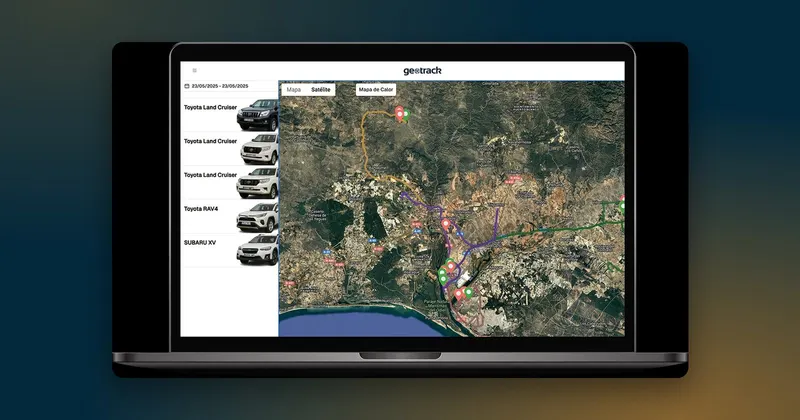
A maintenance plan relies on three pieces of data: each vehicle's mileage, what has been spent on it, and the dates you can't miss. Geotrackr gives you all three in one place.
Its dashboard brings together the mileage, consumption and spending of each vehicle, with comparisons between vehicles and between periods, so you can see how much each one is used and spot consumption that suddenly climbs. In each vehicle's expenses you can allocate repairs, refuelling and any other invoice, and you get its annual spend and its cost per kilometre, which is the figure you need to decide whether a vehicle is still worth keeping.
For dates, document management with expiry alerts stores the insurance, the ITV, cards and any other document with its expiry date, and warns you before it runs out. You can check it from the Android and iOS app or from the web dashboard, with the same data.