Having a van, a lorry or a tractor stolen is not just losing the vehicle: it is losing the tool you work with, sometimes with the load or the implements still inside, and leaving jobs undone while the situation is sorted out. No measure can make theft impossible, but you can make it harder and be ready to act quickly if it happens. This article reviews prevention measures, the steps to take in the first hours and what a GPS tracker offers.
Why work vehicles are a target
Company vehicles and machinery have several characteristics that make them attractive to thieves:
- They spend many hours unattended. On a building site, on a farm or on an industrial estate, especially at night and at weekends.
- They carry valuable items. Tools, materials, fuel in the tank or implements still attached.
- They are often left easy to take. Keys in predictable places, unlocked doors at the yard or machines left in the middle of a field.
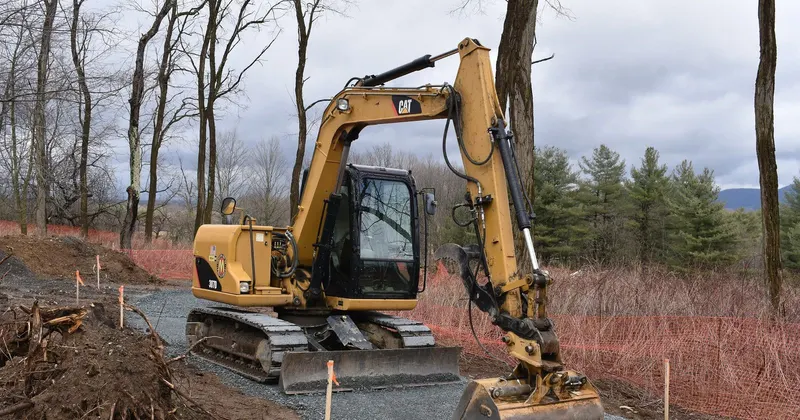
- Machinery is harder to identify. Some equipment has no visible number plate or looks very similar to other units, which makes it hard to recognise if it turns up.
Prevention measures
Prevention works in layers. None is enough on its own, but together they stop the vehicle being an easy target:
Keys and access
- Keep keys under control, not behind the sun visor or in the glovebox. If they are shared, keep a record of who has each one.
- Lock the warehouse, garage or compound, and check that doors and fences are in good condition.
- If a vehicle is going to be parked up for days, consider removing or disabling whatever allows it to be started, depending on the model.
Where and how to park
- Park in well-lit, visible areas, or inside a closed compound.
- Position vehicles so that they are difficult to drive out: for example, the most valuable one behind another.
- Do not leave equipment in view inside the cab.
Identification
- Keep an inventory with the number plate, chassis number, model, colour and photos of each vehicle and machine.
- Mark machines and implements so that they can be recognised: engravings, stickers that are hard to remove or your own markings.
- Keep a copy of each vehicle's documents somewhere other than in the vehicle itself.
Insurance
Check what your policy covers in the event of theft, what the insurer requires to process a claim and the deadline for reporting it. It is better to know this beforehand than to find out once the vehicle has already gone.
What to do in the first hours
If a vehicle is not where it should be, act in an orderly way. Having the steps written down in advance saves time:
- Confirm that it is a theft. First of all, check that nobody in the company has moved it, that it has not been towed and that it is not at the workshop.
- Check where it is, if it has a tracker. The current position and the latest journey are the most valuable information you can give.
- Report it as soon as possible to the Policía Nacional (National Police), the Guardia Civil or the relevant regional police force, with the number plate, chassis number, description and, if you have it, the location.
- Do not try to recover it yourself. Give the location to the officers and let them act. Confronting whoever has stolen it can be dangerous.
- Notify your insurer within the deadline set by your policy and keep a copy of the police report.
- Reorganise the work. Share the stolen vehicle's jobs among the rest of the fleet or find a replacement.
What a GPS tracker offers
A tracker does not prevent theft, but it changes what you can do afterwards:
| Without a tracker | With a tracker |
|---|---|
| You only know where the vehicle was the last time someone saw it. | You can see where it is right now. |
| You do not know when it was moved. | The route history shows when it left and where it has been. |
| The report contains a description. | The report can also include a specific location. |
| You depend on someone recognising it. | Officers have a starting point for their search. |
For it to be useful, the tracker has to be properly installed in the vehicle, not in plain view or somewhere easy to rip out. And you need to know how to check the position in real time, including from your mobile, because thefts do not give warning.
If the vehicles are driven by employees who take them home, remember that checking the location outside working hours must be justified and communicated. The AEPD (Spanish Data Protection Agency) guide on data protection in employment relations cites theft prevention as an example of a legitimate reason, provided the means is proportionate, such as consulting the data only when there is a specific reason and not at all times.
Common mistakes
- Taking too long to notice. A vehicle that spends the weekend on a building site may have been missing since Friday and nobody notices until Monday.
- Not having the details to hand. Without the chassis number or photos, the report is weaker.
- Protecting only vehicles with number plates. Machinery and agricultural equipment get stolen too.
- Going to find it in person. With the location on your mobile it is tempting, but recovery is a job for the officers.
How Geotrackr helps
With Geotrackr, each vehicle has a GPS tracker installed and you see its real-time position on the map from the Android and iOS app or from the web panel. It works for cars, vans, lorries, buses, motorbikes, tractors and agricultural equipment, for personal or company use.
If a vehicle disappears, the route history shows you where it has been and where it has stopped, information you can give to the officers along with the report. And in each vehicle's documentation you can keep the insurance and other papers stored so you do not waste time looking for them.